
How To Make The Best Choice: Do New Natural GLP-1s Rival Injections?
Introduction
GLP‑1 treatments have brought a new approach to weight management. For millions of people, medicines such as Wegovy and Mounjaro have been a fantastic help in making healthy lifestyle changes.
As popularity for these treatments grows, so has the search for natural weight loss options. You have probably by now seen “GLP-1” supplements and patches advertised on platforms such as Facebook and TikTok, claiming to support weight loss through appetite control and reducing cravings.
But do they actually work? Let’s examine the reality behind the claims to help you decide which path is best for you.
The Simple Science: How To Understand GLP-1 In The Body
Glucagon-like peptide-1 (GLP‑1) is a hormone naturally released after eating. It helps control appetite, blood sugar and digestion. Prescription GLP‑1 weight loss medicines like Wegovy and Mounjaro act in a similar way, but are designed to be stronger and longer-lasting.
The main benefits include:
- Feeling full sooner and for longer
- Less food noise and fewer cravings
- Better blood sugar control
When paired with healthy habits, GLP-1 treatments are clinically proven to help people achieve steady, significant weight loss.
New Popular Natural Supplements: Are These The Best Ways To Boost GLP-1?
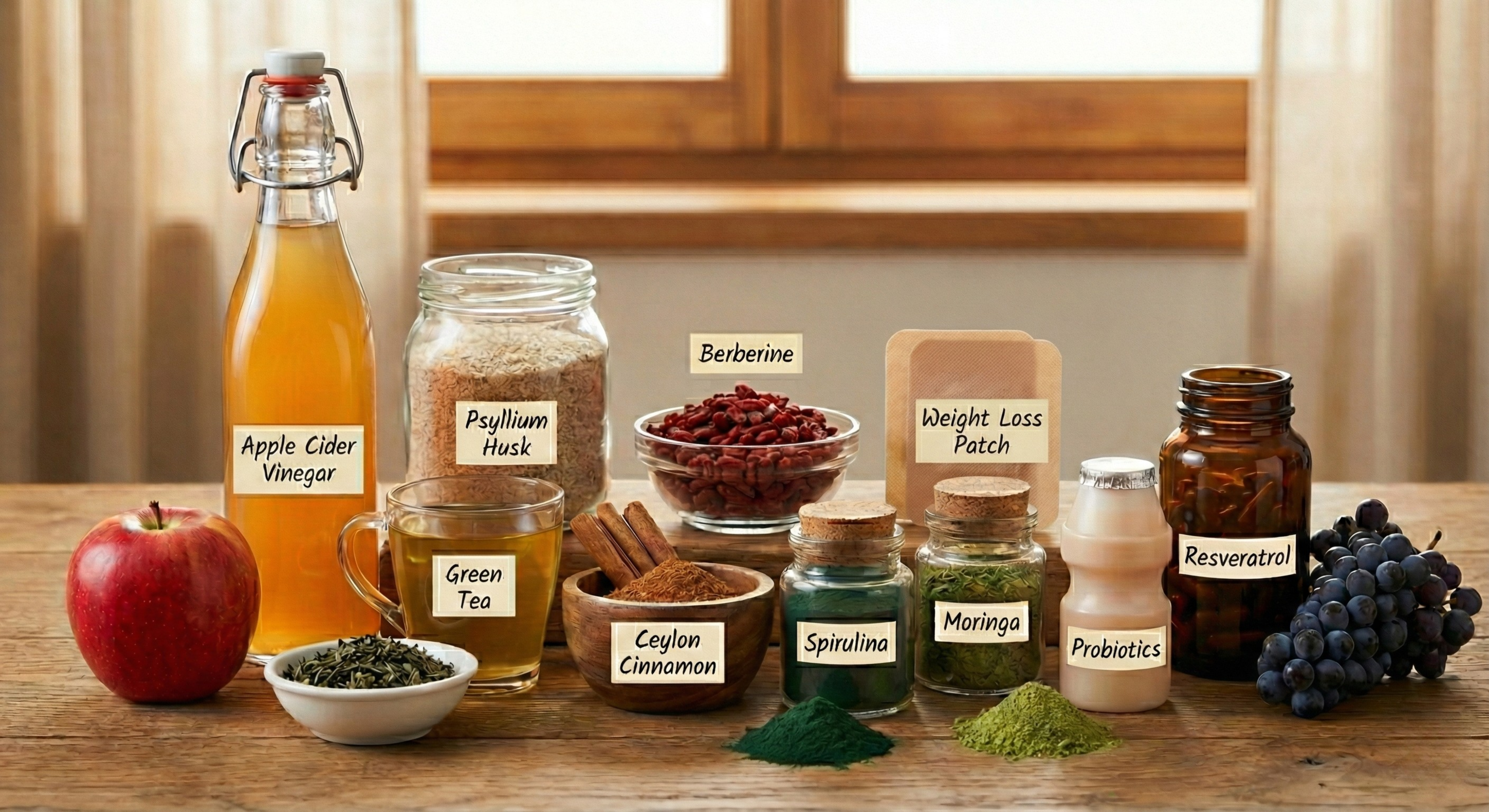
Numerous natural “GLP‑1 supplements” are gaining publicity and popularity. Most contain ingredients claimed to stimulate the body’s own GLP‑1 release or offer general support in appetite and blood sugar control. Here are some of the most common examples. You can usually find these sold individually or as a combination product.
1. Berberine
You may have heard of "Nature's Ozempic" on social media! This is a common title given to berberine, a popular ingredient in Chinese medicine. It comes from plants such as goldenseal and barberry.
Research shows that berberine can boost your natural GLP-1 levels. It may help those living with obesity to lose a little weight, usually between 1 and 2 kilograms.
Berberine can also support your blood sugar, cholesterol and gut health. However, the body struggles to absorb it efficiently, and we do not yet know if it is safe to use as a long-term supplement.
2. Fibre blends (such as glucomannan, psyllium, inulin and apple fibre)
Of all the common fibre products, only inulin appears to have any effect on GLP-1 levels.
That said, evidence suggests that fibre supplements can still help you lose a small amount of weight, usually around one kilogram. They may also lower your BMI and body fat while keeping your bowel movements regular. You will likely see the best results if you use them alongside a balanced diet.
You may notice some gas or bloating when you first start taking fibre supplements, but this usually passes quickly. Just remember that it is vital to drink plenty of water (at least two glasses) with them to prevent any blockages.
3. Ceylon cinnamon
Ceylon cinnamon, sometimes called “true cinnamon”, may stimulate your body to make more GLP-1 and help you drop a little weight. Studies also suggest it is helpful for your blood sugar and cholesterol. However, this research is mostly short-term, and the benefits seem to vary between different groups of people.
4. Green tea extract (EGCG)
Green tea extract might boost your natural GLP-1 levels, potentially helping you lose about one kilogram and slightly trimming your waist. Although these changes are usually too small to be considered clinically significant, green tea remains a fantastic healthy choice for staying hydrated as it is packed with antioxidants.
5. Resveratrol
It seems that resveratrol has very little effect on body weight. It may assist with fat burning or blood sugar control, but this does not usually result in visible weight loss.
6. Apple Cider Vinegar
Apple cider vinegar might help you lose a small amount of weight and could lower your blood sugar. However, it is generally not considered very effective, and we have little proof that it offers lasting benefits.
7. Spirulina
Spirulina has been linked to slightly better weight loss than many other supplements (just under 2kg on average). Studies also show it can help with cholesterol and inflammation in the body. The evidence for weight loss in adults with obesity is fairly strong.
8. Moringa
Moringa oleifera comes from a plant often known as the "miracle tree". It is packed with vitamins, calcium and potassium and is gaining attention for its potential to help stabilise blood sugar and insulin levels. Moringa is a fantastic source of antioxidants and nutrition, but there is very little evidence to suggest it can significantly impact weight loss. It acts more as a general health booster than a powerful appetite suppressant.
9. Probiotics
Probiotics (good bacteria) may help reduce body weight by a small amount. Their main benefits are for your gut health and immunity. One study in animals found that combining probiotics with resveratrol raised GLP-1 levels. However, we do not know for sure if this works the same way in humans yet.
New GLP-1 Patches: Are They An Easy Way To Lose Weight?
The idea of a weight loss patch sounds great if you aren’t a fan of needles, so it’s easy to see why “GLP-1 patches” are popping up frequently online.
None of the many brands on the market contains any licensed GLP-1 medication. Instead, they mostly contain plant ingredients like berberine mixed with vitamins or caffeine. Because these are not regulated medicines, they do not go through the same strict quality checks. The ingredients may not even absorb properly through your skin.
For these reasons, patches are very unlikely to help you lose weight or reduce hunger. It is generally best to be careful with them.
If you are considering GLP-1 medication but feel nervous about the idea of injections, please do not worry. Our team at Medy is here to help you feel confident and in control.
Small steps can make a big difference. You can try using an ice pack to numb the area or letting the pen warm to room temperature to prevent any stinging. We also recommend watching a video guide to see exactly how it is done. If you are still nervous, why not ask a supportive friend to be your 'injection buddy' for the first few doses?
You may also be aware that there is a tablet form of GLP-1 medication, called Rybelsus. It is currently licensed as a diabetes treatment, rather than for weight loss, and research suggests it does not offer the same level of weight loss results as the weekly injectables. It is best to consult your GP if you are interested in advice on this specific medicine.
New Pink Salt Trends: Can A Simple Drink Really Help You Shed Weight?
You may have noticed the "Pink Salt Regime" trending on social media. This usually involves drinking water mixed with pink Himalayan salt and lemon or lime juice first thing in the morning. Some people also add Apple Cider Vinegar.
Fans of this trend say it helps to reduce stress and "flush out" fat. Staying hydrated is vital for your health, but there is no proof that pink salt burns fat or acts like GLP-1 medication.
If you decide to try this trend, it is important to be careful. High amounts of salt can cause bloating, and this often makes you feel heavier. It can also be unsafe for people with high blood pressure. Pink salt is not a magic cure, even if it tastes refreshing.
Reality Check: Do Natural Supplements Really Mimic Prescription Injections?
The research shows that whilst some natural supplements do affect the body’s natural GLP-1, this does not necessarily translate to effective and consistent weight loss. Overall, they cannot match the strength or reliability of prescription GLP‑1 medicines.
Feature | Prescription GLP-1 Medicines | Natural Supplements |
Research & Safety | Carefully studied in large clinical trials that often last many years, to look at long-term safety. | Not tested to the same level and rely on studies that are usually much shorter. |
Regulation | Licensed and regulated for medical use. Manufactured in safe, evidence-based strengths. | Unregulated as medicines. Strength and consistency may vary significantly between brands. |
Effectiveness | Proven to support significant weight loss for many people. | Have much smaller effects on appetite and blood sugar. |
Results | Results are clinically significant and reliable. | Benefits are often subtle, gradual and cannot match prescription strength medications. |
In short, natural options may offer a little support with hunger or digestion. However, they are simply not as powerful as prescription GLP-1 treatments.
Natural Options Can Still Support A Happy Lifestyle
Natural supplements cannot replace prescription medicines for weight loss, but they can still be good for your health if you:
- Want general support with healthy eating habits
- Are unable to take prescription treatments
- Are focusing on gradual lifestyle changes
- Prefer a natural approach and have realistic expectations
- Wish to support gut health
How To Stay Safe: The Best Advice Before Taking New Supplements
Even natural supplements can carry risks. Keep these points in mind:
- Certain supplements can interact with prescription medicines, including diabetes treatments or blood thinners (warfarin).
- Strength and quality can vary between brands
- High doses of some ingredients may upset your stomach
- Supplements are not suitable for everyone
Always consult a doctor or pharmacist before taking a new supplement, especially if you have a medical condition or are taking other medications.
Summary
New natural supplements can be a positive addition to your daily routine, but the reality is that prescription GLP‑1 medicines are a more effective way to achieve significant, sustained weight loss.
Supplements may offer simple support for your gut or heart health, but they are not a direct alternative to medical treatment.
Ready to take the next step?
Discover how to achieve your goals safely. Book a consultation with the Medy team today to find the best treatment plan for a happy, healthier future.
References
- Castagna A, Ferro Y, Noto FR, Bruno R, Aragao Guimaraes A, Pujia C, Mazza E, Maurotti S, Montalcini T, Pujia A. Effect of Apple Cider Vinegar Intake on Body Composition in Humans with Type 2 Diabetes and/or Overweight: A Systematic Review and Meta-Analysis of Randomised Controlled Trials. Nutrients. 2025;17(18):3000. doi: 10.3390/nu17183000. PMID: 41010525; PMCID: PMC12472926. ↩
- Launholt TL, Kristiansen CB, Hjorth P. Safety and side effects of apple vinegar intake and its effect on metabolic parameters and body weight: a systematic review. Eur J Nutr. 2020;59(6):2273 to 2289. doi: 10.1007/s00394-020-02214-3. PMID: 32170375. ↩
- Sood N, Baker WL, Coleman CI. Effect of glucomannan on plasma lipid and glucose concentrations, body weight and blood pressure: systematic review and meta-analysis. Am J Clin Nutr. 2008;88(4):1167 to 1175. doi: 10.1093/ajcn/88.4.1167. PMID: 18842808. ↩
- Muthukuda D, de Silva CK, Ajanthan S, Wijesinghe N, Dahanayaka A, Pathmeswaran A. Effects of Cinnamomum zeylanicum extract on lipid profile, glucose levels and its safety in adults: a randomised, double blind, controlled trial. PLoS One. 2025;20(1):e0317904. doi: 10.1371/journal.pone.0317904. PMID: 39854533; PMCID: PMC11759401. ↩
- Li Z, Wang Y, Xu Q, Ma J, Li X, Yan J, Tian Y, Wen Y, Chen T. Berberine and health outcomes: an umbrella review. Phytother Res. 2023;37(5):2051 to 2066. doi: 10.1002/ptr.7806. PMID: 36999891. ↩
- Jia MJ, Liu XN, Liang YC, Liu DL, Li HL. The effect of green tea on patients with type 2 diabetes mellitus: a meta-analysis. Medicine (Baltimore). 2024;103(47):e39702. doi: 10.1097/MD.0000000000039702. PMID: 39809182; PMCID: PMC11596636. ↩
- Lak M, et al. Effects of spirulina supplementation on body composition: a systematic review and meta-analysis of randomised controlled trials. Nutraceuticals & Wellness. 2025. PMID: 40528207. ↩
- Ezzat SM, El Bishbishy MH, Aborehab NM, Salama MM, Hasheesh A, Abdel Motaal A, Rashad H, Metwally FM. Upregulation of MC4R and PPAR-α expression mediates the anti-obesity activity of Moringa oleifera Lam. in high-fat diet-induced obesity in rats. J Ethnopharmacol. 2020;251:112541. doi: 10.1016/j.jep.2020.112541. PMID: 31911179. ↩
- Waterman C, Rojas-Silva P, Tumer TB, Kuhn P, Wicks S, Stephens JM, Wang Z, Mynatt RL, Cefalu WT, Raskin I. Isothiocyanate-rich Moringa oleifera extract reduces weight gain, insulin resistance and hepatic gluconeogenesis in mice. Mol Nutr Food Res. 2015;59(6):1013–1024. doi: 10.1002/mnfr.201400679. PMID: 25620073; PMCID: PMC4456298. ↩
- Pegah A, Abbasi-Oshaghi E, Khodadadi I, Mirzaei F, Tayebinai H. Probiotic and resveratrol normalise GLP-1 levels and oxidative stress in the intestine of diabetic rats. Metabol Open. 2021;10:100093. doi: 10.1016/j.metop.2021.100093. PMID: 33997755; PMCID: PMC8091914. ↩
- Yao H, Zhang A, Li D, Wu Y, Wang CZ, Wan JY, Yuan CS. Comparative effectiveness of GLP 1 receptor agonists on glycaemic control, body weight and lipid profile for type 2 diabetes: systematic review and network meta-analysis. BMJ. 2024;384:e076410. doi: 10.1136/bmj-2023-076410. PMID: 38286487; PMCID: PMC10823535. ↩
- Zamanian N, Imani H, Talebi S, Rahimlou M, Khosroshahi RA, Mohammadi H. The efficacy and safety of glucagon like peptide 1 receptor agonists in non diabetic adults with overweight or obesity: an umbrella review of systematic reviews and meta-analyses. Eur J Pharmacol. 2025;1003:177966. doi: 10.1016/j.ejphar.2025.177966. PMID: 40680981. ↩
- Moosavian SP, Naghipour M, Malekahmadi M, Bastami S, Sina N. Salt and obesity: a systematic review and meta-analysis of observational studies. Int J Food Sci Nutr. 2017;68(3):265–277. doi: 10.1080/09637486.2016.1239700. PMID: 27706955. ↩